This article contains affiliate links. If you buy through them we may earn a commission at no extra cost to you.
By Editorial Team · Updated 2026-07-27 · 9 min read
Getting started with an IP-TV provider is straightforward: choose a reputable service, subscribe, install a player app, and load your playlist. This guide walks through each step so you can start streaming live TV, sports, and on-demand content within minutes.
Whether you’re cutting the cord or supplementing your existing service, IP-TV gives you access to hundreds of channels at a fraction of cable costs. But not all providers are equal. We’ll show you how to pick a reliable one, avoid common setup mistakes, and get the best picture quality with no buffering.
Key Takeaways
- Start with a free trial to test reliability before committing to a long-term plan.
- Use a VPN to prevent ISP throttling and protect your privacy while streaming.
- Look for providers that offer an electronic program guide (EPG) and support multiple devices.
Table of Contents
- What Is IP-TV and How Does It Work?
- Step 1: Choose a Reliable IP-TV Provider
- Step 2: Subscribe and Get Your Credentials
- Step 3: Install an IP-TV Player App
- Step 4: Load Your Playlist URL or M3U File
- Step 5: Verify and Customize Your Channels
- Troubleshooting Common Issues
- IP-TV vs. Cable TV: Quick Comparison
- Frequently Asked Questions
What Is IP-TV and How Does It Work?
IP-TV (Internet Protocol Television) delivers television content over your internet connection instead of traditional satellite or cable. You don’t need a dish or a coaxial cable — just a device (smart TV, phone, tablet, or computer) and a stable broadband connection.
The service works by streaming channels in real time from a provider’s server to your IP-TV player app. Most providers offer a playlist file (M3U) or a portal URL that you enter into the app. The app then decodes the streams and displays them as live channels or on-demand content.
Because IP-TV relies on your internet speed, quality varies. A fiber or cable connection of at least 25 Mbps is recommended for HD streaming, and 50 Mbps for 4K.
IP-TV Provider
See the current plans and available options on the official page.
Browse IP-TV Provider Plans →Step 1: Choose a Reliable IP-TV Provider
The biggest mistake beginners make is picking the cheapest provider without checking reviews or trial quality. A bad provider will buffer constantly, drop channels, or go offline without notice.
Here’s what to look for:
- Free trial – Most reputable providers offer 24 to 48 hours. Use it.
- Channel list – Make sure it includes your must-watch sports, news, and entertainment.
- EPG – An electronic program guide makes browsing easy.
- Anti-buffer technology – Some providers use CDN-based streaming to reduce lag.
- Customer support – Live chat or a responsive ticket system is a good sign.
A quick search on Reddit or Trustpilot can reveal real user experiences. Look for patterns — consistent complaints about downtime are a red flag.
Step 2: Subscribe and Get Your Credentials
Once you’ve chosen a provider, sign up on their website. You’ll usually choose a plan (1 month, 3 months, 6 months, or yearly). Avoid committing to a year before testing the trial first.
Common mistake: Entering a fake email address. You need a valid email to receive your playlist URL or M3U file. Double-check your spam folder if the email doesn’t arrive within 10 minutes.
After payment, the provider will send you either:
- An M3U URL (playlist link)
- A portal URL (for apps like STBEmu)
- A username and password (for Xtream Codes API)
Keep these details safe — you’ll need them in the next step.
Step 3: Install an IP-TV Player App
Your IP-TV provider gives you the stream — but you need a player to watch it. The most popular apps work across devices:
- TiviMate (Android TV, Fire TV) – Clean interface, supports EPG.
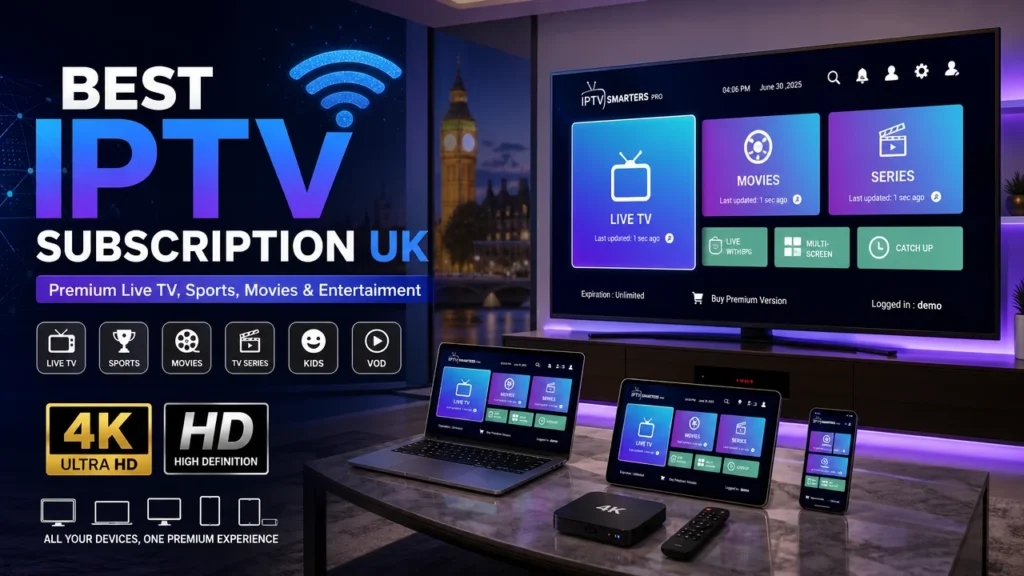
- IP-TV Smarters (iOS, Android, Smart TV) – Easy setup for beginners.
- VLC Media Player (PC, Mac, phone) – Free and can load M3U files.
- Perfect Player (Android TV) – Lightweight and fast.
Tip: Download apps only from official stores (Google Play, Apple App Store, or the TV’s built-in app store). Sideloading from unknown sources can introduce malware.
Once installed, open the app. It will ask for your playlist URL or login details. Don’t close the app yet — keep it open as you move to the next step.
Step 4: Load Your Playlist URL or M3U File
In your player app, navigate to the settings or “Add Playlist” section. Paste the M3U URL provided by your IP-TV service. If you received a file (M3U), upload it directly.
Common mistake: Typing the URL incorrectly. URLs are case-sensitive. If you copy-paste, ensure there’s no extra space at the beginning or end. Also, some providers use HTTP instead of HTTPS — try both if one fails.
After entering the URL, the app will parse the playlist. This can take 30 seconds to a couple of minutes depending on the number of channels. Once done, you’ll see a list of categories (Sports, News, Movies, etc.).
Step 5: Verify and Customize Your Channels
Click on a channel that’s important to you — for example, a live sports event or a 24-hour news station. If it loads within a few seconds and plays smoothly, your setup is correct.
Tips for a better experience:
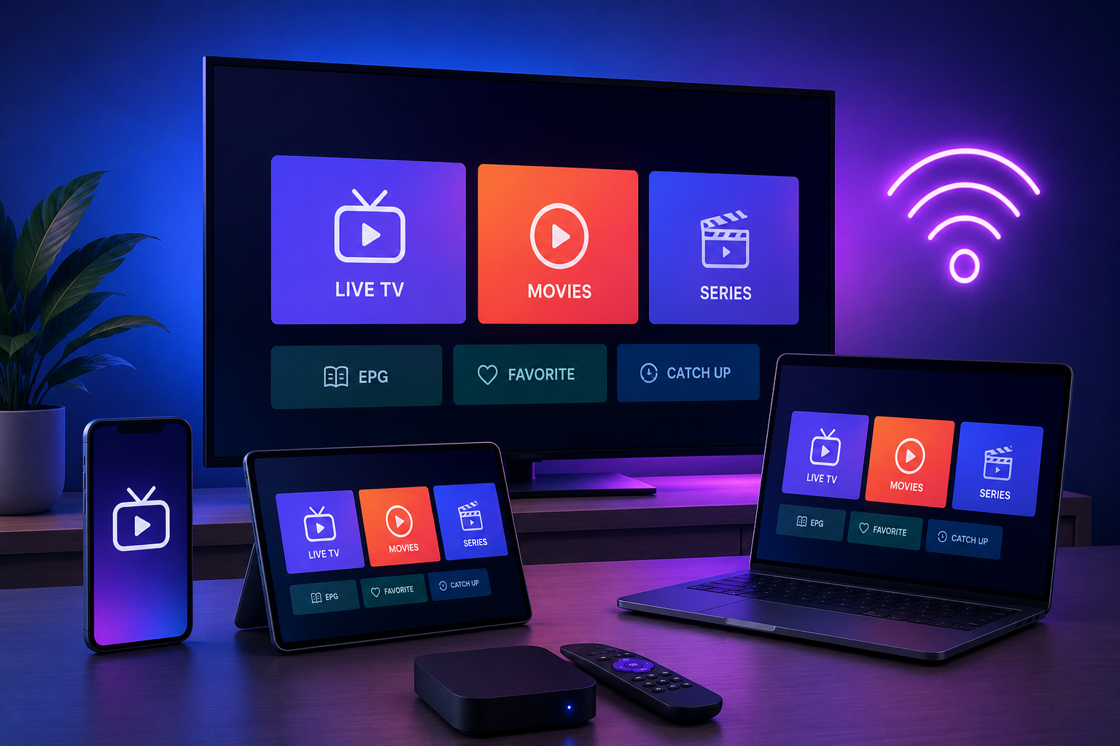
- Add the EPG source if your provider offers one – this adds program names and times to the guide.
- Rearrange channels into a custom order (many apps let you create favorites).
- Enable hardware decoding in the app settings if available – it reduces CPU load on older devices.
- Use a wired Ethernet connection instead of Wi-Fi for more stable streaming.
Once everything looks good, you’re ready to enjoy your IP-TV service. Remember that free trials are the perfect time to test reliability during peak hours (evening and weekends).
Troubleshooting Common Issues
Even with a good provider, you may hit snags. Here are the most common fixes:
| Issue | Likely Cause | Solution |
|---|---|---|
| Channels won’t load / black screen | Wrong URL or expired playlist | Re-copy the URL from your provider’s email; check if subscription is active. |
| Constant buffering | Slow internet or ISP throttling | Use a VPN; upgrade internet plan; switch to Ethernet. |
| EPG shows “No information” | Missing or wrong EPG URL | Contact provider for correct EPG link; enter it in app settings. |
| App crashes on startup | Incompatible app version | Update the app or try a different player (e.g., TiviMate instead of Smarters). |
If none of these work, reach out to your provider’s support. A good IP-TV provider will respond within a few hours.
IP-TV vs. Cable TV: Quick Comparison
Still unsure if IP-TV is for you? Here’s a side-by-side look at the main differences:
| Feature | IP-TV Provider | Cable TV |
|---|---|---|
| Monthly cost | $10–$20 | $60–$150 |
| Channel count | 5,000–20,000+ | 100–300 |
| On-demand content | Yes, usually included | Extra fee or limited |
| Hardware required | Smartphone/tablet/computer + player app | Set-top box (often rented) |
| Contract length | Monthly or quarterly — no long-term | 1–2 year contracts common |
| Reliability | Depends on internet speed and provider | More consistent (dedicated infrastructure) |
For most cord-cutters, IP-TV is the clear winner on price and channel variety. Cable still wins if you want zero reliance on your home internet connection.
If you’re ready to try IP-TV, start with a provider that offers a free trial. For a hassle-free experience, we recommend checking out IP-TV Provider’s current plans — many users report minimal buffering and excellent channel variety. Their anti-freeze technology makes a noticeable difference during live sports.
Frequently Asked Questions
How do I choose the best IP-TV provider for my needs?
Start by listing the channels you watch most (sports, news, international). Look for a provider that offers a free trial to test reliability on your connection. Read recent reviews on Reddit or Trustpilot, focusing on uptime and customer support quality. Avoid providers with no trial and vague refund policies.
Is IP-TV legal? How can I tell if a provider is legitimate?
IP-TV itself is a technology — it becomes illegal when the provider streams copyrighted content without proper licensing. Legitimate providers are transparent about their licensing and have clear terms of service. If a provider offers every channel for pennies and doesn’t ask for identification, it’s likely operating in a gray area. Stick with well-reviewed services that have a registered business presence.
What internet speed do I need for buffer-free IP-TV streaming?
For standard definition (SD) channels, 10 Mbps is sufficient. HD channels require at least 25 Mbps, and 4K needs 50 Mbps or higher. These numbers are per device — if multiple people stream simultaneously, add their requirements together. Using a wired Ethernet connection often improves stability over Wi-Fi.
Do I need a VPN when using an IP-TV provider?
A VPN is recommended for two reasons: it prevents your ISP from throttling streaming traffic, and it protects your privacy if the provider operates in a legally ambiguous area. Choose a VPN with fast servers (WireGuard protocol) and a no-logs policy. Avoid free VPNs — they often have data caps and slower speeds.
What’s the difference between M3U URL, Xtream Codes, and portal URL?
An M3U URL is a direct link to your channel playlist — you enter it in any app that supports playlists. Xtream Codes uses a username/password login, often with a separate API URL. A portal URL is used with apps like STBEmu (emulates a set-top box). Most modern providers offer all three options; choose the one that’s easiest for your preferred player.
Can I watch IP-TV on multiple devices at the same time?
It depends on your plan. Some IP-TV providers allow one connection at a time, while others offer multi-device plans for a small extra fee. Check the “connections” or “devices” section before subscribing. If you plan to watch on your TV, phone, and tablet simultaneously, look for a provider that supports at least three concurrent streams.
Why does my IP-TV buffer only during peak hours (evenings)?
Peak-hour buffering usually indicates ISP throttling or congestion on your local network. Try using a VPN to see if performance improves. If not, test the same channel on a different device or connection. Persistent evening buffering may mean the provider’s servers are overloaded — consider switching to one with dedicated CDN servers.
What happens if my IP-TV provider shuts down? Can I get a refund?
Provider shutdowns happen, especially with services operating in gray areas. Reputable providers offer money-back guarantees or prorated refunds. Always pay with a credit card or PayPal for buyer protection. Avoid paying via cryptocurrency or bank transfer — those are nearly impossible to reverse. If a provider seems too cheap to be sustainable, buy month-to-month instead of yearly.
The Verdict
The IP-TV Provider is ideal for cord-cutters who want a vast channel library with minimal buffering. Its straightforward setup and reliable performance make it a top choice for beginners and experienced users alike.
Get IP-TV Provider Now →This link goes to the seller’s official page. If you buy through it we may earn a commission at no additional cost to you. Our assessment is written independently.
Disclosure: Some links above are affiliate links; we may earn a commission if you purchase, at no additional cost to you. This does not affect our editorial assessment, which is based on publicly available product information.