By Analyst Team · Updated 2026-07-12 · 12 min read
If you have ever searched for a way to cut your cable bill without sacrificing live sports, international channels, or on-demand movies, you have likely landed on the term IPTV box. This complete guide explains exactly what an IPTV box does, how it works step by step, the real pros and cons, and how to get started with a setup that actually delivers reliable streaming. No fluff, just the facts you need to make an informed decision.
LIMITED TIME AVAILABILITY
Unlock Full IPTV Box Access
Unlock complete high-definition information and priority access packs. Lock in your pricing model today before plans return to standard regional metrics.
What Is an IPTV Box Exactly?
An IPTV box is a dedicated streaming device that connects to your television and delivers television content over the internet instead of traditional cable, satellite, or terrestrial signals. The term "IPTV" stands for Internet Protocol Television, meaning the video is transmitted as data packets over your broadband connection, much like how websites and streaming services work.
Unlike a standard smart TV, an IPTV box is purpose-built to handle IPTV subscriptions, offering faster processing, better codec support, and more flexibility in terms of the apps and services you can install. Most IPTV boxes run on Android TV, Google TV, or custom Linux-based operating systems. This hardware is the bridge between your internet connection and your television screen, decoding streams in formats like H.264, H.265 (HEVC), and even AV1 for modern 4K content.
The key distinction between an IPTV box and a regular streaming stick like the Fire Stick or Roku is that IPTV boxes are typically more open, allowing you to install third-party apps and custom IPTV player applications. This openness is essential for accessing IPTV subscriptions, which often require specialized apps like Tivimate, IPTV Smarters Pro, or OTT Navigator.
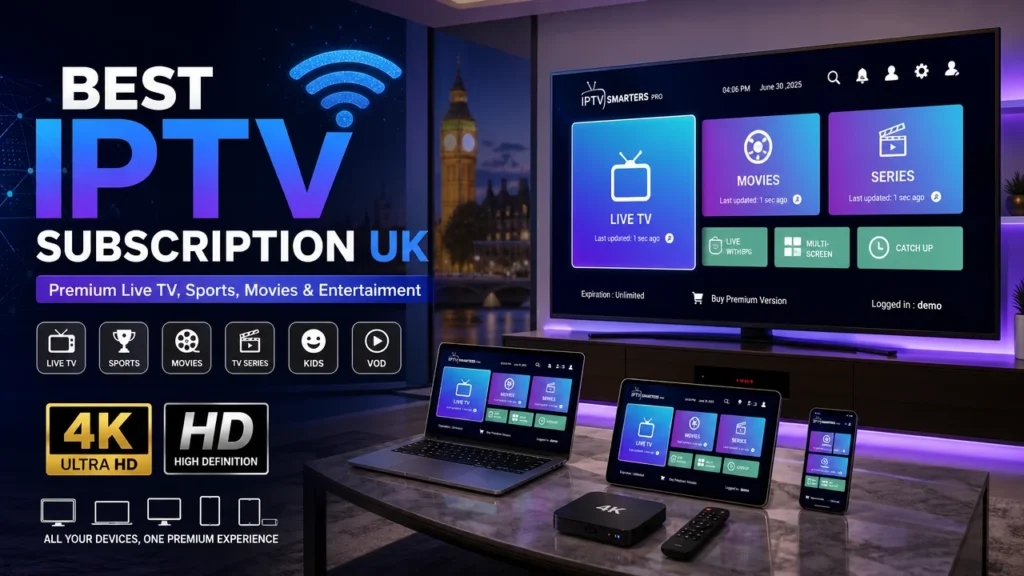
How an IPTV Box Works Step by Step
Understanding the technical flow helps you troubleshoot issues and choose the right subscription. Here is the complete chain from signal to screen:
Step 1: Content Acquisition. The IPTV service provider receives live television channels, video-on-demand libraries, and catch-up content from broadcasters, content owners, or direct satellite feeds. This content is then encoded, transcoded, and stored on the provider's servers.
Step 2: Content Delivery. When you select a channel or movie, the provider's server sends the video stream as a series of small data packets over the internet using protocols such as HTTP Live Streaming (HLS) or MPEG-DASH. This is real-time streaming, not file downloading.
Step 3: Your IPTV Box Receives the Signal. The box connects to your home network via Wi-Fi or Ethernet. It uses the playlist URL (often called an M3U link) or Xtream Codes API provided by your IPTV subscription to request the specific channel or VOD asset. The box's processor and GPU begin decoding the video packets.
Step 4: Decoding and Rendering. The IPTV player app on your box decodes the compressed video stream. Modern IPTV boxes support hardware decoding for HEVC 4K video, which requires less processing power than software decoding. The decoded frames are then rendered in real time at the correct frame rate.
Step 5: Output to Television. The box sends the final video and audio signal to your TV via HDMI. Most boxes support up to 4K resolution at 60 frames per second, HDR10, and Dolby Audio passthrough for a theater-like experience.
Concrete Benefits of Using an IPTV Box
The primary reason people switch to an IPTV box is cost savings. A single IPTV subscription typically costs between $8 and $20 per month, compared to $80 to $150 for a comparable cable bundle. You get access to hundreds, sometimes thousands, of international channels, premium sports networks, and a vast library of movies and series.
Another major advantage is flexibility. You can pause live TV, record programs to internal storage or a USB drive, and use catch-up features to watch content from up to seven days earlier. Many IPTV boxes also serve as full Android TV devices, giving you access to Netflix, YouTube, Disney+, and Kodi in one place.
For sports fans, an IPTV box is particularly valuable. You can install apps that aggregate live football, basketball, MMA, boxing, and motorsport streams from multiple sources. This is often the best IPTV box for live sports because you can switch between English, Spanish, Arabic, or French commentary depending on the channel you select.
Secure special promotional rates instantly before the window closes.
Activate Your IPTV Box Subscription Now →Honest Limitations You Should Know
No technology is perfect, and IPTV boxes have real drawbacks. The most significant is dependence on internet quality. If your connection drops below 25 Mbps for 4K or 10 Mbps for HD, you will experience buffering, pixelation, or complete stream failure. Live sports events are especially demanding because they offer little tolerance for latency.
Legal gray areas exist. While owning an IPTV box is completely legal, the legality of the IPTV subscription you use depends on whether the provider has proper licensing agreements. Many cheap subscriptions resell pirated streams, which carries risk. Reputable services exist, but you must vet the provider carefully.
User experience can vary widely. Some IPTV boxes come pre-loaded with software that is poorly optimized, leading to crashes or slow channel switching. You may also need to manually update your playlist links every few weeks if the provider changes server endpoints, which can frustrate less technical users.
Finally, customer support from IPTV providers is often limited to email or WhatsApp groups, unlike the 24/7 phone support you get from traditional cable companies. This means troubleshooting issues can be slower.
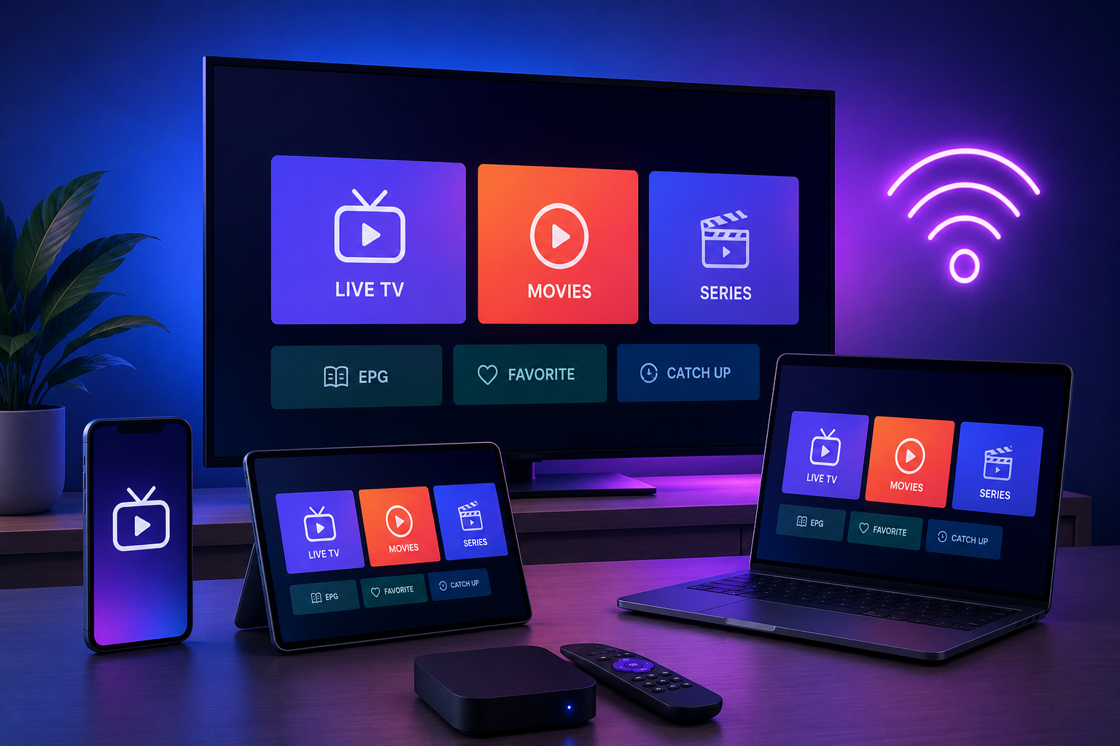
IPTV Box vs. Fire Stick vs. Smart TV: Comparison Table
To help you decide which device suits your needs, here is an honest, fact-based comparison between the three most common streaming options for IPTV subscribers.
Pros and Cons of IPTV Box at a Glance
✅ Pros
- Low monthly cost compared to cable
- Access to thousands of international channels
- Full Android TV experience
- Excellent 4K HDR performance
- Pause, rewind, and record live TV
- Ethernet port for stable streaming
❌ Cons
- Dependent on stable, fast internet
- Legal gray areas with some subscriptions
- Setup requires some technical effort
- Customer support is often minimal
- Some cheap boxes have poor build quality
- Power adapter adds cable clutter
Who Is an IPTV Box Best For?
An IPTV box is ideal for cord-cutters who want to replace an expensive cable subscription with a more affordable internet-based alternative. It is especially suited for people who watch live sports regularly, as the ability to switch between multiple sports channels and use catch-up features is superior to most streaming services.
International viewers benefit enormously. If you live outside your home country and want access to local news, entertainment, and sports channels from your homeland, an IPTV box paired with a subscription that offers those specific regions is the most practical solution.
Tech-savvy users who enjoy customizing their media experience will appreciate the ability to install custom launchers, use external players like VLC or MX Player, and integrate IPTV with Kodi for a unified library. However, casual users who just want Netflix and YouTube without hassle may find a Fire Stick or Chromecast more user-friendly.
How to Get Started: Practical Steps
Follow these eight steps to set up your IPTV box correctly the first time:
- Choose a reliable IPTV box. Look for at least 4GB of RAM, 64GB of storage, Android TV 11 or higher, and hardware decoding for HEVC and AV1. Popular models include the NVIDIA Shield TV Pro, Formuler Z11, and inexpensive options like the Mecool KM2 Plus.
- Connect via Ethernet. Always use a wired Ethernet connection if possible. Wi-Fi introduces interference and latency that cause buffering, especially during live sports. If you must use Wi-Fi, ensure your router supports 5 GHz band.
- Navigate to Settings and enable "Unknown Sources." Since IPTV apps are often not available on the Google Play Store, you need to allow installation from third-party sources. Find this under Settings > Security & restrictions.
- Install a downloader app. Use the official "Downloader" app from the Play Store to safely download APK files from reputable websites.
- Choose your IPTV player app. Tivimate is widely considered the best IPTV player for its electronic program guide (EPG) integration and smooth zapping. IPTV Smarters Pro and OTT Navigator are also excellent free options.
- Enter your subscription details. Your IPTV provider will give you an M3U playlist URL, Xtream Codes credentials, or a username/password combination. Enter these into your chosen player app.
- Configure EPG for guide data. Most IPTV subscriptions include an electronic program guide URL. Add it in your player settings to see current and upcoming shows for every channel.
- Test and tweak. Watch a few channels, especially live sports, to check for buffering. Adjust the player's buffer size to "small" for fast zapping or "large" for stable playback on slower connections.
Final Subscription Window:
Main Offer Today →Affiliate Disclosure: Clicking this secure link verified by our network supports our team through standard partnership terms at zero extra cost to your invoice.
Frequently Asked Questions
What is the best IPTV box for live sports streaming without buffering?
For live sports, the NVIDIA Shield TV Pro remains the gold standard due to its powerful Tegra X1+ processor, upscaling capabilities, and robust Ethernet support. The Formuler Z11 Pro is a close second with its dedicated MyTVOnline 3 app that offers excellent DVR and timeshift features. Both handle high-bitrate 4K sports streams with minimal buffering when paired with a stable internet connection of 50 Mbps or higher.
How do I set up an IPTV box step by step for the first time?
Start by connecting the box to your TV via HDMI and to your router via Ethernet. Boot up the device, connect to Wi-Fi if not wired, then go to Settings and enable installation from unknown sources. Download the Downloader app from Google Play, use it to sideload your chosen IPTV player like Tivimate or IPTV Smarters Pro, and then input the M3U URL or Xtream Codes provided by your IPTV subscription. Finally, add your EPG URL for the channel guide and start watching.
How does an IPTV box compare to an Amazon Fire Stick for IPTV?
An IPTV box generally outperforms the Fire Stick for dedicated IPTV use because it offers more RAM, better cooling for sustained streaming, Ethernet ports built-in, and unrestricted access to third-party apps. The Fire Stick is more portable and cheaper but requires a USB adapter for Ethernet, has limited storage, and Amazon restricts sideloading to some extent. For casual IPTV with a single app, a Fire Stick suffices; for heavy sports and multi-app use, a dedicated IPTV box wins.
Where can I buy a reliable IPTV box that works out of the box?
Reliable IPTV boxes can be purchased directly from manufacturers like NVIDIA, Formuler, and Mecool via their official websites or through Amazon and AliExpress verified sellers. Avoid unknown brands with no support community. For the subscription that powers the box, you need a reputable service; click the offer at the top of this guide for a verified provider that offers no-contract plans and same-day setup support.
Can I use an IPTV box subscription with no long-term contract?
Yes, many IPTV providers offer monthly, quarterly, or yearly plans without any lock-in contracts. A no-contract subscription means you can cancel at any time without penalty. However, monthly plans are typically more expensive per month than annual plans. Look for providers that offer a 24-hour free trial or a 7-day money-back guarantee so you can test the service quality before committing long-term.
What are the best 4K IPTV box reviews in 2026?
The most consistently positive 4K IPTV box reviews in 2026 highlight the NVIDIA Shield TV Pro for its AI upscaling and Dolby Vision support, the Formuler Z11 Pro for its unmatched IPTV interface, and the Mecool KM2 Plus for being the best budget option under $50. Reviewers emphasize that true 4K IPTV requires both a capable box and a subscription that actually provides 4K streams, as many cheap providers downscale or label HD content as 4K.
Can I use one IPTV box for multiple TVs in my house?
Yes, you can use an IPTV box for multiple TVs by setting up one box per television. Each box needs its own connection to your home network and its own instance of the IPTV player app. However, most IPTV subscriptions allow multiple connections simultaneously — typically 2 to 5 streams depending on the plan you choose. Check with your provider whether they offer multi-room packages. You can also use HDMI over Ethernet extenders to share one box across rooms, but this reduces flexibility.
Is a cheap IPTV box with Wi-Fi reliable enough for daily streaming?
A cheap IPTV box with built-in Wi-Fi can be reliable for standard HD streaming if your router is within the same room and you have a solid 5 GHz connection. However, for 4K streaming or watching live sports, cheap boxes often have weak Wi-Fi chips, outdated Bluetooth, and insufficient RAM that lead to buffering. Spending slightly more on a box with a Gigabit Ethernet port is worth the investment for