By Analyst Team · Updated 2026-08-01 · 12 min read
If you've searched "what is IPTV TV," you're probably weighing it against cable, checking whether it works on your television, or trying to pick a provider you can trust. IPTV (Internet Protocol Television) streams live channels and on-demand content over your internet connection instead of using satellite, antenna, or coaxial cable. It is a real, widely used technology — not a niche hack. The problem is that the buyer experience is messy. Some services deliver flawless 4K streams for years; others disappear within weeks. This guide walks you through what IPTV TV truly is, the criteria that predict whether you'll love it, and how to purchase safely.
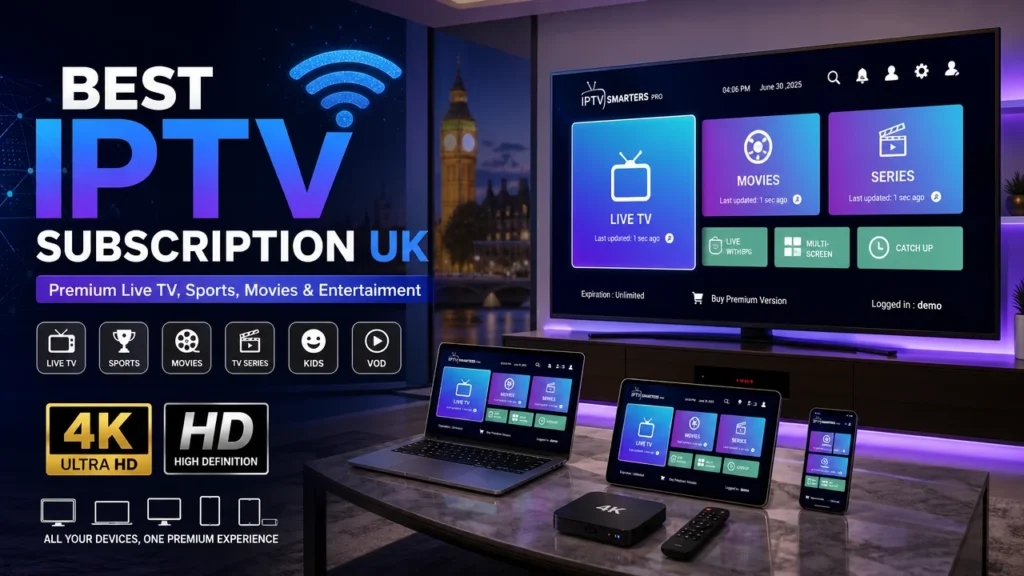
The screen above shows what a solid IPTV dashboard looks like: an organized channel list, an electronic program guide, and a VOD library in one unified interface. That polish often hides big differences in server quality behind the scenes. A pretty app means nothing if the streams buffer every few minutes.
Why Many People Regret Their Choice
Scroll through any IPTV review Reddit thread and you will see the same complaints repeated. Streams stall every few minutes. Channels vanish a month after purchase. Subscriptions stop working after an app update. Support teams reply with copy-paste excuses — if they reply at all. These stories are real, and they are more common than providers want you to know.
The root cause is almost always a buying decision made on price alone. When a service advertises 20,000+ channels for less than a cinema ticket, something is being cut. A reliable IPTV operation requires servers, bandwidth, app maintenance, and at least a small support staff. None of that is free. Shady sellers pocket renewal fees and let quality slide as soon as the promotional window closes.
Another overlooked reason for regret is device mismatch. People buy a subscription because it works on their friend's Android box, then discover the provider's app runs terribly on their LG Smart TV or Apple TV. They never checked compatibility before paying. What looked like a money-saver becomes months of frustration with a service they cannot even use properly.
The uncomfortable truth is that IPTV itself is not the problem — ignoring basic buyer criteria is. Most horror stories could have been avoided with a proper trial, a quick device check, and a few direct questions to support. You will get exactly those questions in this guide.
What Is IPTV TV, Really? A Quick Clarification
IPTV stands for Internet Protocol Television. Instead of receiving a broadcast signal from an antenna, satellite dish, or cable box, content is delivered as data packets over your IP network. Think of it as watching live television the same way you watch a Netflix title — via internet streams rather than a dedicated broadcast pipe.
Three formats matter to buyers. Live IPTV mirrors broadcast TV in real time. VOD gives you access to a library of films and series you can play whenever you want. Time-shifted TV (catch-up) lets you watch programs after they've already aired. Most premium subscriptions include all three.
What makes IPTV different from Netflix is that it is usually sold as a channel package, often accessed through an M3U playlist or a provider app. You are not browsing a single platform's catalog; you are receiving an entire lineup of live channels, EPG data, and often a massive VOD archive.
Now a crucial distinction: legal IPTV providers hold rights to distribute content — services like YouTube TV, Hulu + Live TV, or national telecom IPTV packages. Then there is the unregulated reseller market, where providers sell premium channel packages at very low prices without proper redistribution rights. Legal IPTV works flawlessly but costs close to cable. The reseller market offers astonishing value but requires caution. Both options appear in the comparison table later in this article.
Thinking about signing up for a premium service? Test a free trial before you commit to a full plan — and only compare providers that meet the quality criteria below.
Start your what is iptv tv trial →LIMITED TIME AVAILABILITY
Unlock Full what is iptv tv Access
Unlock complete high-definition information and priority access packs. Lock in your pricing model today before plans return to standard regional metrics.
Criteria That Should Drive Your Decision
Before touching a checkout button, evaluate any IPTV provider against these six criteria. They separate a satisfied long-term buyer from a one-month casualty.
- Server stability and uptime. Ask how many server locations the provider operates and what connection protocol they use (HTTP, RTSP, or HLS). Providers with multiple dedicated servers handle evening peak traffic far better than a single overloaded machine.
- Channel quality, not just channel count. 25,000 channels is meaningless if half buffer at night. Check whether the provider guarantees at least HD on premium channels and confirmed 60 fps on sports.
- Device compatibility. Confirm the app works on your actual TV operating system — Firestick, Android, LG webOS, Samsung Tizen, iOS, or Windows. Ideally, run a trial on the same device you plan to use daily.
- Customer support speed. Contact support before buying and ask a technical question. Measure how long they take to answer. If a pre-sale question is slow, imagine post-sale support during a sports blackout.
- Trial conditions. A 24-hour trial tells you very little. Thirty days or at least 48 hours with full channel access lets you test prime-time hours. Some providers even offer a demo playlist you can test in your own IPTV player before paying.
- Refund policy. Legitimate providers offer refunds within 7–14 days if the service does not meet delivery standards. No refund policy equals more risk for you.
Device compatibility deserves special attention. Firestick accounts for more than half of all IPTV installations because it supports most Android-based IPTV apps and M3U players. What does a modern IPTV setup look like in practice? The photo below shows exactly that — a compact HDMI dongle that turns an ordinary television into an IPTV device in minutes.
This is why the best IPTV service for Firestick is usually the safest choice for beginners and advanced users alike: the ecosystem is mature, apps are updated frequently, and troubleshooting guides are abundant online.
Secure special promotional rates instantly before the window closes.
Activate Your what is iptv tv Subscription Now →What You Need to Know About the Current Market
The legal tier got more expensive
Major legal IPTV services like YouTube TV and Hulu + Live TV now price around $70–$85 per month. They offer rock-solid reliability, DVR, and complete legal safety. They are also, honestly, not much cheaper than traditional cable. That is why many households look at alternative IPTV options in the first place.
The reseller market matured
Between legal giants and scammy sellers sits a middle market of subscription IPTV providers that maintain dedicated infrastructure and responsive support teams. Providers in this tier usually do not advertise on mainstream platforms; they operate through direct subscription websites. Quality varies, but the top of this tier now rivals cable in dependability.
Cheap is cheaper for a reason
Packages under $5 per month often rely on unofficial redistributed streams. They can work for months, but they also disappear overnight during legal enforcement actions. If you are fine with that risk, treat it as a temporary experiment rather than a serious TV solution.
Live sports raise the bar
Sports is where buffer performance gets unforgiving. If the biggest matches are the main reason you are switching, prioritize providers that advertise 4K/50–60 fps sports streams and have a proven track record on match days.
Questions to Ask Before Buying
Send these eight questions to a provider before you pay. The quality of the answers tells you more than any sales page:
- Is there a trial that covers evening peak hours and weekend sports?
- How many servers do you operate, and in which countries?
- What internet speeds do I need for HD and 4K streams?
- How many devices can connect at the same time?
- Do you provide an EPG (program guide), and is it available in my language?
- What happens if a channel breaks during a live match?
- Is the subscription tied to one device or one IP address?
- Who do I contact if the service goes down, and how fast do they respond?
A provider that gives direct, specific answers is worth considering. Vague responses, copy-pasted FAQs, or silence are red flags.
Warning Signs to Spot
- Lifetime accounts for a one-time fee: no sustainable IPTV business can offer lifetime access. This is a cash-grab tactic.
- Payment only via cryptocurrency or gift cards: scam sellers love untraceable payments. Avoid them.
- Absurd channel counts: 50,000 channels is mostly unstable filler. Quality and stability matter more.
- No trial or a trial under 30 minutes: they do not want you testing the service under real load.
- Zero digital footprint: no website history, no community reviews, no verifiable contact info.
- High-pressure sales tactics: "This deal expires in 10 minutes!" is not how legitimate subscription businesses operate.
Comparison of Available Options
Here is a realistic comparison of the main categories you will encounter in 2026. Prices reflect typical monthly costs and reliability expectations.
For most buyers, the sweet spot is a premium IPTV subscription: it offers genuine cost savings without falling into the scam tier.
IPTV vs Cable TV: Pros and Cons
Why IPTV wins
- 60–80% cheaper for comparable channel lineups
- Watch on Firestick, Smart TV, phone, tablet
- International channels from one package
- Built-in VOD library in most subscriptions
- No annual contracts or equipment fees
Why cable still wins
- Predictable quality regardless of internet speed
- Reliable local network coverage
- No buffering or server-side outages
- Easier for non-technical household members
- Backed by a regulated telecom provider
Recommendations by Budget and Needs
Typical household replacing cable (budget $10–20/month): choose a premium IPTV provider with multi-connection support. You should be able to watch on your living-room TV while someone streams on a second device.
Families wanting zero legal gray areas (budget $70+): sign up for a fully licensed legal IPTV service. You pay more, but you get dependable DVR, no takedown worries, and support from a real company.
Sports fans (budget $15–25/month): prioritize providers that confirm 60 fps streams and offer a sports-optimized channel list. Ask specifically about big-match day performance before subscribing.
Budget-only buyers (under $6/month): treat cheap resellers as an experiment, not a primary TV solution. Keep your cable standby option or use free legal streaming apps in parallel.
Best overall for most readers: a premium IPTV subscription from a dedicated provider with a transparent trial, tested support, and solid device compatibility.
How to Maximize Your Investment
Once you have chosen a provider, four extra steps will protect your subscription and make the experience noticeably better.
1. Use the trial window fully. Test during weekday evenings, weekend afternoons, and a live sports event. If any of these fail, you want to know before paying.
2. Connect via Ethernet or strong Wi-Fi. A stable 25 Mbps connection is enough for HD, but Wi-Fi congestion in multi-device households causes most buffering complaints. Hardwire your Firestick or TV if possible.
3. Set up EPG and favorites. The program guide is what makes IPTV feel like cable. Spend ten minutes organizing favorite channels and loading the correct EPG data; it transforms the user experience.
4. Use a VPN. Some internet service providers throttle IPTV traffic. A quality VPN prevents throttling and also adds privacy when your provider is in the gray zone.
The network map above illustrates why your connection setup matters as much as your subscription. Even the best provider is limited by your internet quality, router placement, and local ISP behavior.
Final Subscription Window:
Get Subscription Link Today →Affiliate Disclosure: Clicking this secure link verified by our network supports our team through standard partnership terms at zero extra cost to your invoice.
Frequently Asked Questions
How does IPTV work on my existing internet connection?
IPTV uses the same internet connection you already have for browsing and streaming. Live channels are sent as data packets to your device, where an app reassembles them into video. You will need roughly 25 Mbps download speed for HD and 50 Mbps or more for 4K streams. An Ethernet connection improves stability significantly if your Wi-Fi signal is weak.
What is the best IPTV service for Firestick in 2026?
The best IPTV service for Firestick prioritizes Android TV app compatibility, a stable EPG, and responsive support. Amazon Firestick runs most Android-based IPTV apps, so a provider with a dedicated APK that auto-updates reduces maintenance hassle. Premium providers with at least two years of operating history are the safest choice, especially those offering a 48-hour or longer trial.
IPTV vs cable TV — which option is more cost-effective for households?
IPTV is typically 60–80% cheaper than cable for a comparable channel lineup, with more device flexibility and no annual contract. Cable, however, wins on predictable reliability and local network support. A household with stable internet and normal viewing habits can save several hundred dollars per year by switching to IPTV.
Where can I buy IPTV subscription without getting scammed?
Buy only from providers that offer a trial of at least 24–48 hours, accept credit card or PayPal (which include buyer protection), have publicly available contact information, and show a presence in community reviews on Reddit or similar forums. Avoid sellers that demand cryptocurrency only and those that push lifetime accounts.
What do IPTV review Reddit communities say about provider reliability?
Most IPTV Reddit threads emphasize that reliability changes over time, so recent reviews matter more than old ones. Look for consistent themes about uptime, channel replacement speed, and support responsiveness. Treat overly positive reviews with caution — some are provider-sponsored or short-term first impressions.
How to set up IPTV on Smart TV step by step?
First, install an IPTV player app such as IPTV Smarters or TiviMate from your TV's app store. Then enter the M3U URL or Xtream Codes provided by your subscription service into the app. The provider emails these details after purchase. Your channels will appear in the EPG once the app fetches the playlist. Many premium providers also offer custom apps that simplify setup further.
Are there legal IPTV providers in the USA, and what does "legal" mean?
Yes — services like YouTube TV and Hulu + Live TV are legal IPTV providers because they license content from rights holders. "Legal" in this context means the service pays broadcasters for distribution rights. Many reseller-market IPTV sellers do not hold those rights, which puts them in a gray zone. If legal certainty matters, choose a provider with proper licensing.
What does a typical IPTV channels list in USA include for local networks?
Legitimate and large IPTV packages generally include the major American networks — ABC, CBS, NBC, FOX, and PBS — depending on your region. Many premium international services also carry CNN, ESPN, TNT, HGTV, Food Network, and regional sports channels. The exact list varies by provider and location, so always request a current channel list before buying.